NAUVOOTEMPLE.ORG
Explore the record
Architecture · Preservation · Documentary History

The Nauvoo Temple

Stones, documents, and ownership

A surviving origional Nauvoo Temple 1844 star-stone presently in John Hajicek’s collection.
1841Construction begins
1848Temple fire
1850Destructive winds

The original Nauvoo temple was a building of the 1840s whose history survives in documents, images, and dispersed pieces of carved limestone. Construction began under Joseph Smith in 1841. Its familiar sunstone capitals belonged to a larger architectural scheme; one original capital survives in the Smithsonian’s National Museum of American History. The temple burned in 1848, and its remaining fabric suffered destructive winds in 1850. Those events must be distinguished from the history of the modern building on the site.

The documentary questions reach beyond architectural appearance. Who held title after Joseph Smith’s death? Who attempted to sell or lease the property? What authority did rival claimants assert, and what did the surviving deeds, advertisements, and correspondence actually authorize? My published study, The Sale and Burning of the Nauvoo Temple, examines those transactions and the competing interests surrounding the building’s destruction. The surviving stones demand the same discipline: establish their original position where the evidence permits, trace their movement after demolition, and preserve the records that connect a fragment to the building. An old carving deserves a documented history; a repeated attribution does not supply one.

John Hajicek outdoors, wearing a blue suit and red bow tie.
John Hajicek, historian and preservationist.

John Hajicek: Research and Preservation at Nauvoo

I devoted twenty-five years to a campaign to save four Nauvoo temple sunstones. The work required attention to the stones themselves and to the documents governing their ownership and preservation. That experience is inseparable from my research into what became of the original temple after Joseph Smith’s death. A building’s legal history can determine the fate of its surviving fabric long after the walls have disappeared.

My study of the sale and burning of the temple was presented to the John Whitmer Historical Association and published in revised form. I examine the subject through early correspondence, property records, newspapers, and material evidence. My purpose is to recover the history attached to the surviving objects and to preserve enough of the record for others to examine it.

Nauvoo Temple Information

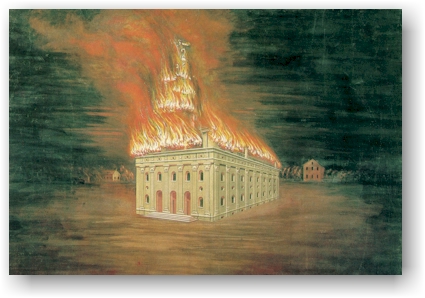
Painting of the Nauvoo Temple burning.

Temple Sale and Fire, 1846–1848

The advertised sale and burning of the Nauvoo Temple, an academic article authored by John Hajicek for the John Whitmer Historical Association: Sale and Burning of the Nauvoo Temple

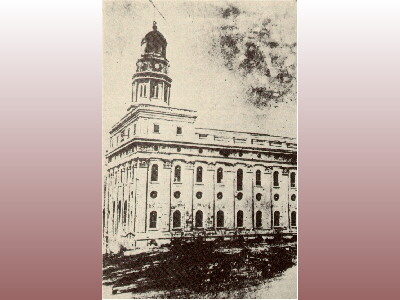
Nineteenth-century photograph of the Nauvoo Temple.

Nauvoo Temple Slide Show

An automated slide show created by John Hajicek, demonstrating a variety of known images of the Nauvoo Temple: Slide Show

Nauvoo Temple Grounds

A photograph of a bulldozer clearing the Nauvoo Temple archaeological site, as predicted: Bulldozer

Original photograph unavailable.

Nauvoo Temple Updated Pictures

Construction pictures of the replicated Nauvoo Temple, © 2001, 2011 John Hajicek: Picture 1 Picture 2 Picture 3

Picture 1, Picture 2, Picture 3 — original photographs unavailable.

Rare Nauvoo Artifacts

A private collection of rare Mormon artifacts, many related to the Nauvoo Temple, at: Mormonism.com

1840s Nauvoo Scriptures

Replica gift editions of the Book of Mormon and Doctrine & Covenants as originally printed in Nauvoo, now available at: MormonChristmas.com

Family of a Nauvoo Prophet

View the 1840s portrait profiles of the Smith family painted by their neighbor in Nauvoo, artist Sutcliffe Maudsley: Joseph Smith Family

Nauvoo Temple Newsletter

Request the Nauvoo Temple Newsletter by email

The surviving evidence

  1. Read John Hajicek’s The Sale and Burning of the Nauvoo Temple
  2. Examine the Smithsonian’s original sunstone capital
  3. The Mormon House and its historical collections